
Building foundations to bring life and hope to families worldwide.
Every day, all around the world, families are facing a looming crisis where women and children are dying in childbirth due to completely preventable causes. From the depths of Asia’s mountain regions to right at home, families are faced with the reality of death in a moment where life should be celebrated.
Due to this crisis, the World Health Organization (WHO) has put out a yearly report citing midwives as the largest and most urgently needed maternal healthcare professionals worldwide.
We believe that pregnancy and childbirth are critical seasons in the lives of every family and provide a divine opening to impact communities with God’s transformational love and care. We believe that where the world sees crisis, God sees opportunities for His power, love, and eternal hope to shine through. We desire to equip young leaders to make an impact where no one else is looking, and be sent where no one else is going; to bridge the gap and protect life.
Through biblical and practical training, students will gain a foundation for serving and supporting women, babies, and families through the seasons of pregnancy, birth, and postpartum. Students will be equipped to understand maternal health from a Kingdom perspective while growing in their leadership, vision, and confidence to respond to the needs of families around the world.
The eight-week outreach portion provides opportunities to put this training into practice alongside maternal health ministries in the nations. Students will serve families, support local ministries, and gain practical experience while discovering how God can use maternal health as a doorway to bring His love, hope, and transformation to communities.
This course is approved as a Maternal Health Course with the University of the Nations.
Click here to learn more about how you can get a degree with University of the Nations.
Successful completion of a Discipleship Training School is a prerequisite for FMHM.
This is a bilingual school – English and Spanish.
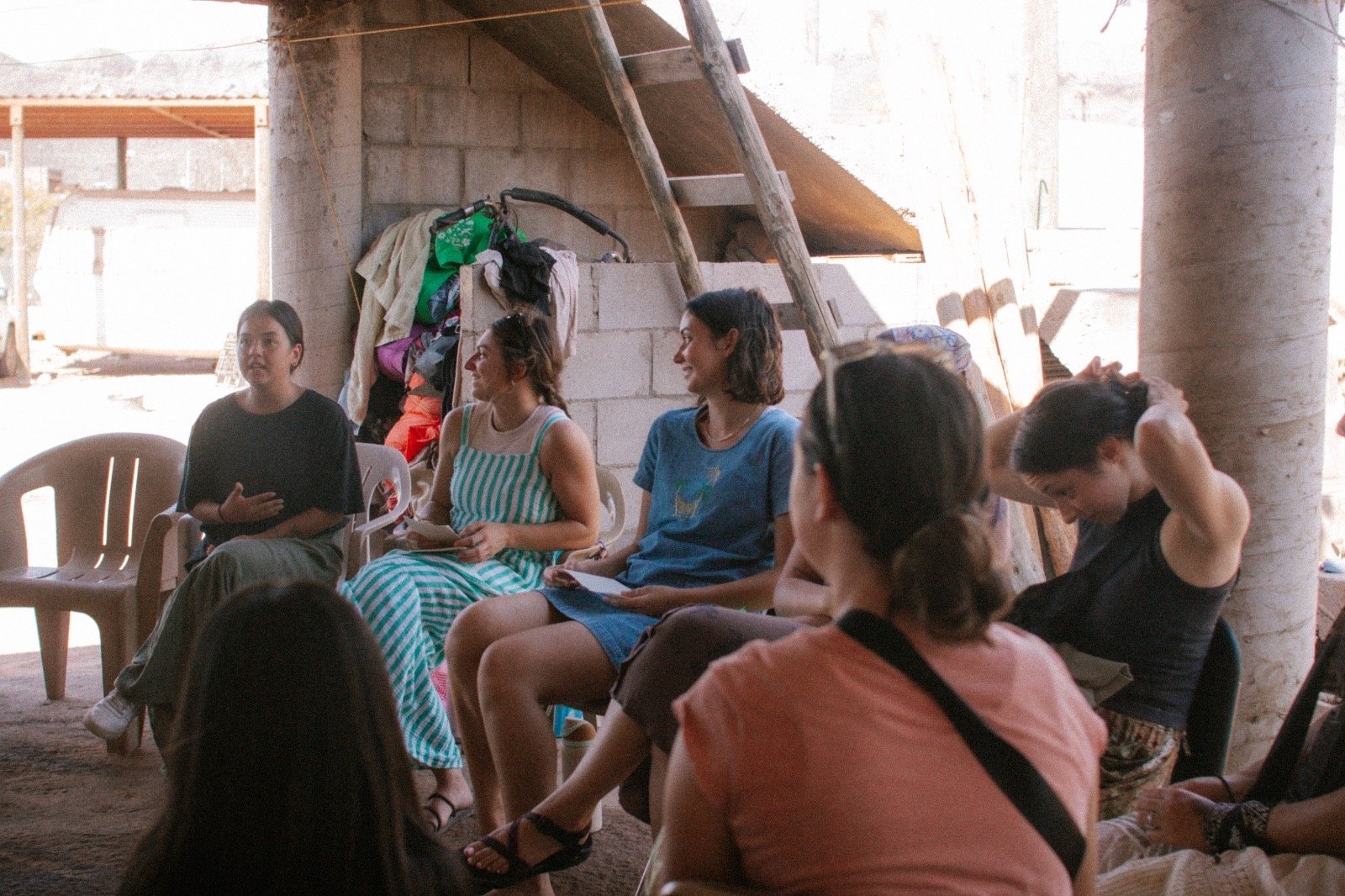
Lecture Phase

Some of the topics we'll cover include:
-
Anatomy and Physiology of Birth
-
Childbirth Education
-
Birth and Postpartum Doula
-
Biblical Bioethics
-
Midwifery in Developing Nations
-
Community Development
-
Theology of Suffering
-
Pregnancy Clinic Models
-
Apostolic Pioneering Principles
In our 12-week course, we emphasize the importance of seeing young leaders trained to make a long-term impact in the lives of families in every corner of the world. In this course, you will develop your skills and knowledge in the area of maternal health; learn from leaders, healthcare workers, and professionals in this field. Get trained as doulas and childbirth educators, and build a solid foundation for midwifery, birth work, and family support. Whether you will apply this knowledge as a ministry to your own family or to others far away, this school will equip you with a variety of tools and an understanding of Gods design of the childbearing season.
During the lecture phase, you will be presented with opportunities to be discipled in your leadership, develop vision, and become confident in your call to the nations through the foundation of community, intercession, and spiritual covering.
Outreach Phase
In our 8-week outreach, you will apply your knowledge and skills in key locations as a support to long-term workers extending the Kingdom of God through maternal health ministries. Our current location options are built on relationships with established or pioneering efforts in Mexico and Latin America.
Your outreach will give you opportunities to serve in family spaces, teach classes and give workshops, assist as birth doulas, and give postpartum care. You may even be able to fulfill some requirements for the UofN Childbirth Education & Doula Certifications during your outreach.
Join a movement of women making an impact in families around the globe.
Upcoming Schools
- Choose the school you want to attend.
- Select the quarter you would like to participate.
- Arrival days:
- Lecture dates:
- Outreach dates:
- Debrief dates:
- Graduation:
- Departure dates:
Select a school above to see available quarters.
School Cost
- Choose the school you want to attend.
- Select your country of origin.
The theoretical phase must be paid in full before the end of the 3rd week of the theoretical phase.
The outreach trip must be paid in full before the end of the 8th week of the theoretical phase.
Select a country and school above to see pricing.
Want more information? Fill out the form below!
FAQ's and Resources
Have other questions? Email us at schools@ywammazatlan.com
How fluent do I need to be in Spanish or English?
We are a completely bilingual campus! Meaning, speaking only Spanish or English will be more than enough. If neither Spanish nor English is your first language, you just need to comprehend and/or speak one. That being said, we’ve had students in the past that weren’t fluent in either of our languages, and they’ve been willing, amazing people that brought amazing life and culture to our base family. Pray about it! We don't want to hold you back if you're called here.
How far away will I be from everything?
Our YWAM campus is located within walking distance to lots of ‘Tiendas’ (little shops), restaurants, yummy tacos, scenic spots, and coffee shops, as well as some great beaches. Wal-Mart and other grocery stores, the Golden Zone (tourist area), excellent restaurants, movie theatres, and a shopping mall are either a short taxi/uber ride or bus ride away.
What are the eating/cooking arrangements?
Breakfast, lunch and dinner are provided and all meals are eaten together on our outdoor patio, which looks out over the ocean! Our campus has a kitchen run by our staff and students. We do our best to accommodate all health restrictions (gluten-free, dairy-free), but know that there might be times where we are unable to. There is a fridge for students to use and store personal food in.
Is there a dress code on the base?
For girls – there are no short shorts or skirts, no crop tops. When it comes to swimming, we require swim shorts, and a one piece/tank top.
For guys – Please no speedos. Please don’t have your boxers showing or be shirtless unless swimming.
This will all be covered more in-depth in your welcome pack, after applying!
How much luggage can I bring?
Your airline will determine how much/what kind of luggage you can bring; however while on outreach you will be limited to one pack/suitcase. So pack accordingly. Large hiking/trekking backpacks are ideal for Outreach, but you can get along with a duffel or suitcase if you can't get your hands on a backpack. We totally recommend having a hiking pack if possible. Your accommodations during the Lecture Phase will be limited in personal storage space, so keep that in mind! Everything you bring on to DTS will need to be taken with you on outreach. We have no extra storage space on our campus.
What kind of clothes should I bring?
You’ll need a set of good clothes for local church and ministry, casual clothes for lectures/leisure. We tend to be pretty casual at the campus, but churches here tend to dress up more. Also, depending on where you go on outreach, girls may need longer skirts and long sleeve shirts for working in remote communities. That can be purchased here if needed. And don’t forget some dress clothes for your graduation!!
*Because of the humidity here, clothes can occasionally get stretched out. Keep this in mind when you’re packing your favorite things (but don’t pack like your going to the wilderness either! We still enjoy wearing nice, stylish clothes as much as anyone!
Here's a blog to help!
How do I raise money for my DTS/Secondary School?
There are several different ways to raise money for YWAM Mazatlan schools and outreaches. How you decide to raise your money really depends on your motivation, creativity and willingness to work hard. There is no one right way to raise the money, but to help you along, listed below are some suggestions and ideas that have worked for us. Remember that everything starts and end with prayer.Trust that if God is giving the heart to attend a school with YWAM Mazatlan, He will also give you the tools, favor, and strength to do it. Our biggest recommendation is to start right away! Fundraising is much better and easier when you're at home, than when you are here.
Suggested Reading on Raising Support:
Friendraising: Building a Support Team That Lasts by Betty Barnett
Funding Your Ministry: Whether You’re Gifted or Not by Scott Morton
People Raising: A Practical Guide to Raising Support by Bill Dillon
What is the weather like in Mazatlan?
May through to September are the hot, humid months. You can expect to be sweaty and sticky some of the time you're outside! October and November are a bit more temperate, but you’ll still be wearing summer clothes. Then December through March are the cooler months where you can throw on a light jacket or hoodie at night.
In regards to the hot months- do not worry! There is an AC unit in each bedroom and classroom, and we are blessed to have that during the summer!
How do I pay for my school?
Is there phone or internet access?
How much spending money will I need?
What’s supplied in my room?
How should I bring my spending money?
What about laundry?
Is it safe?
Mexico in the media has been pinned as a dangerous place, but put all those “I’ve heard’s…” to rest. Our city is a beautiful city to live in. The people are warm and friendly and willing to try out their English. Our beaches are generally safe for swimming and surfing. We will help get you acquainted to the city, the beaches and the Mexican culture.
Yes, like all countries, there is brokenness, hurting people, and corruption in Mexico. God has called us to be bearers of light and hope, to be a part of Him redeeming Mexico, one story and family at a time. Our campus is located in a perfect spot where we can reach places that God has called us to go to, but also host students from all over the world and have an incredible place to do that without jeopardizing safety.
We live in a middle-class neighborhood located directly on the boardwalk of the city, which is one of many places that are safe. Just like any other city in the world, there is wisdom to how we live here, and that doesn't change wherever you are. Our campus is a closed-to-the-public building, and only students and staff live there!
Because of our community-style culture, we're always doing things together. Ministry, going out for tacos at night, walks to coffee shops. We have set curfews at night, and a security guard that takes care of our campus at night.